Every year, thousands of people disappear into the shadows of human trafficking. The numbers are staggering—and terrifying. Behind each statistic is a family torn apart, a life hijacked, and a clock that never stops ticking.
But here's something most people don't know: the same internet that predators use to exploit people can also be weaponized to find them. Open Source Intelligence, or OSINT, isn't just for government agencies and cybersecurity professionals anymore. It's become an unexpected lifeline for desperate relatives, and sometimes, it's the difference between finding a person and losing them forever.
The Reality We'd Rather Not Face
Human trafficking doesn't always look like what we see in movies. There isn’t always a dramatic kidnapping scene or a villain twirling a mustache. The reality is far more insidious.
Traffickers prey on vulnerability. They target kids from broken homes, runaways fleeing abuse, teenagers struggling with addiction. They offer what looks like safety, or love, or an escape—and then trap their victims. The traditional methods of finding these people often fall short. Police departments are overwhelmed. Investigations move at a bureaucratic pace. By the time official channels produce results, it might already be too late.
That's where OSINT comes in. Because traffickers, like everyone else in the 21st century, leave digital trails. Phone numbers. Online ads. Patterns of behavior. Metadata. These fragments of information exist in publicly accessible places, scattered across the internet waiting to be assembled by someone determined enough to look.
One Father's Desperate Search
Bryan Seeley — a former U.S. Marine turned ethical hacker — had the technical skills but probably never imagined he'd have to use them this way.
In 2014, his life was already complicated. Fresh from a divorce, he'd become father to a newborn son while his ex-wife dealt with custody issues involving her daughter, Aurora. The state had taken custody, and Aurora ended up in a group home—one of those places where success stories are rare and kids often run away.
Aurora did run away. But then something unexpected happened: she asked if Bryan would take her in as a foster child. Never mind that she'd never liked him much. Never mind the difficult history. He said yes.
Bryan went through months of background checks and foster care licensing. Aurora moved in. She went to rehab. Things seemed to be looking up.
Drugs and teenagers—they're brutally hard to separate. About a year later, Bryan had to fly to Tokyo because his mother was diagnosed with brain cancer. When he returned, everything fell apart. Aurora vanished.
One day she was living in his house. The next, she'd contacted someone to pick her up, turned off her phone, and disappeared completely. She'd gone out of her way to avoid detection.
A few days later, a friend found photos on Backpage that might have been Aurora. Backpage was a classified advertising website that became the largest platform for sex trafficking ads in the U.S. before the FBI seized it in 2018.
The images didn't show her face, but there were elements—details that could have been her. These ads usually have different phone numbers, different names, different ages listed. All the numbers traced back to burner phones.
Bryan started digging. He pulled every phone number from the ads and began the painstaking work of tracking them down. Cross-referencing. Searching metadata. Gathering every scrap of open-source intelligence he could find.
Searching phone numbers, he quickly learned, isn't straightforward. Type a number into Google and you'll often get bizarre results—massive lists of phone numbers paired with random, made-up names. It's almost as if these lists exist specifically to obfuscate information.
Bryan didn't have the luxury of certainty. He had photos that might have been Aurora, but they didn't show her face. He had phone numbers, but they all traced to burners. He had suspicions, hunches, possibilities—but no solid proof.
What he did have was refusal to quit. So he kept searching, page after page, trying every angle, never giving up after the first dead end.
Six weeks went by. Nothing. He drove around the rougher parts of town, asking if anyone had seen Aurora. Still nothing.
Then someone called his ex-wife. Aurora had contacted them asking for money. Finally—a phone number.
Bryan tried everything. Been Verified. Intelius. White pages. Every major skip-tracing site he could think of. The number wasn't found anywhere.
In a last-ditch effort, he searched old business license registrations. There it was: the number registered to an old towing company. The registration had an address.
He had someone call the number repeatedly until someone finally answered. When they asked for Aurora, the person hung up. That was all the confirmation he needed.
Twenty minutes later, police and ambulances arrived at the address. Ten minutes after that, they walked out with Aurora.
She went straight to the ICU. The detox was brutal. But she got the help she needed.
According to Bryan, Aurora wasn't technically held against her will—but she was being pumped with so many drugs that leaving was extremely difficult. When you can't even get out of bed without drugs, "choice" becomes a pretty meaningless word.
The Luck Factor
Here's the thing about Bryan's success: he got lucky (or in my opinion - blessed).
Lucky that the number appeared in business directory listings. Lucky that he had the technical background to know what to look for. Lucky that he didn't give up.
The phone number should have appeared in standard skip-tracing searches. It didn't—because of formatting errors that kept getting replicated across systems. It was a 10-year-old landline, passed from database to database, with inconsistent formatting that made it nearly invisible to standard searches.
Bryan only found it because he tried different combinations. The number with the area code but no parentheses. With parentheses and the first dash but not the second. No dashes, just spaces. He doesn't even remember which exact combination finally worked, but one of them triggered a match in Google for that old business directory.
It all came down to different search strings of the same phone number.
The Hard Truth About Finding Trafficked Children
There is no magic formula. No single method that works every time. Each case is different, each trafficker uses different tactics, and what works once might not work always.
But that doesn't mean we're helpless. OSINT provides tools and techniques that can help—if you know where to look and how to piece together fragments of information into actionable intelligence.
Practical OSINT Techniques and Tools
Following the Trail
Phone numbers, email addresses and similar info, remain one of the most valuable pieces of evidence in trafficking cases. Traffickers use them to communicate with clients, and despite using burners, patterns emerge.
What to do:
- Don't stop at the first search result. Try multiple platforms: Google, Bing, specialized people-search sites like TrueCaller, Spy Dialer, and reverse phone lookup services.
- Vary your search formatting. Try the number with and without parentheses, with and without dashes, with and without spaces, with and without the country code.
- Search the phone number with quotation marks in Google: "1234567" to find exact matches.
- Look for the number in business directories, old Craigslist ads, classified listings, and social media posts.
- Use advanced Google search operators: site:facebook.com "phone number" or site:twitter.com "phone number".
Tools:
- TrueCaller (caller ID and spam blocking that can reveal number owners)
- Spy Dialer (reverse phone lookup that actually calls the number)
- Whitepages, Intelius, Been Verified (paid skip-tracing services)
- OSINT Framework's phone number section for comprehensive tool lists
Analyzing Online Advertisements
Traffickers advertise victims on classified ad platforms, "dating" services, and escort listings. In Bryan's case, it was Backpage—the notorious platform that federal authorities eventually seized in 2018. But shutting down one site doesn't eliminate the problem; other platforms emerge.
The specifics of which sites are currently being used for trafficking change constantly as platforms are shut down, rebranded, or move operations. Organizations like the National Center for Missing & Exploited Children (NCMEC), Polaris Project, and Thorn maintain updated intelligence on trafficking activities online. Law enforcement agencies, vigilantes and anti-trafficking organizations track these patterns.
What we know from Bryan's experience is that the ads follow patterns. In his case, Backpage had "a bunch of ads with different phone numbers and different text in the advertisements: different names, different ages listed, and so on." The same photos appear under different names, different ages, different numbers.
What to look for:
- Metadata in photos (EXIF data can reveal location, device type, timestamps)
- Background details in images (hotel bedding patterns, furniture, wall decorations, visible landmarks through windows)
- Multiple ads with similar writing styles but different phone numbers
- Age progression signs if you have older photos of the victim
Tools:
- Google Images reverse search (upload a photo to find where else it appears online)
- TinEye (another reverse image search engine)
- Jeffrey's Image Metadata Viewer (extracts EXIF data from images)
Social Media Investigation
Most people—including traffickers and victims—leave traces on social media. Even if accounts are deleted, cached versions or connections might remain. It’s also worth noting that just like terrorists, these traffickers communicate using codes. According to Jeff Tiegs, the CEO of Skull Games, 304 is “hoe” spelled upside down and backwards from the old pager days. “Rose” - either sent as a text or emoji, means money.
Techniques:
- Search for the victim's known usernames across all platforms using tools like Namechk or Sherlock
- Look for tagged photos, check-ins, or location data
- Examine friends lists and follower connections of the victim's known accounts
- Search for the victim's name combined with location keywords
- Check cached versions of deleted profiles using archive.org's Wayback Machine
Tools:
- Sherlock (searches usernames across 300+ social networks)
- Social-Searcher (real-time social media search)
- Wayback Machine (archived versions of websites and profiles)
- Spokeo, Pipl (aggregate social media and public records)
Geolocation and Mapping
Sometimes photos or posts contain enough information to determine location, even if it's not explicitly stated.
What to examine:
- Visible landmarks, street signs, business names in photo backgrounds
- Unique architectural features or local vegetation
- License plate styles (different states/countries have different formats)
- Area codes in phone numbers
- Metadata in photos if EXIF data wasn't stripped
Tools:
- Google Earth and Google Street View (virtually explore locations)
- GeoGuessr techniques for identifying locations from minimal visual clues
- SunCalc (determines sun position to verify photo timestamps and locations)
- OpenStreetMap (community-created maps with detailed location data)
Pattern Recognition and Behavioral Analysis
Criminals get lazy. They reuse things. And that's where you can catch them.
Look for:
- Repeated phone numbers across different ads or platforms
- Similar writing styles, typos, or unique phrases
- Same locations (hotels, neighborhoods) appearing repeatedly
- Consistent posting times or patterns
- Shared email addresses, usernames, or account names
Dark Web and Deep Web Monitoring
This territory is more advanced and potentially dangerous, but trafficking activities occur in these spaces.
Considerations:
- Exercise extreme caution. Don't download anything. Don't interact.
- Use a VPN and Tor browser if accessing dark web sites
- Understand that much of this activity may require reporting to experts rather than solo investigation
- Focus on surface web and deep web (unindexed regular websites) before venturing into dark web territory
- Note: For most families, working with organizations that specialize in dark web monitoring is safer than attempting this alone.
When OSINT Becomes Evidence
Finding information is one thing. Turning it into actionable evidence that law enforcement can use is another.
Best practices:
- Document everything with screenshots, timestamps, and URLs
- Don't tamper with or access private accounts
- Report findings to police immediately rather than attempting a rescue yourself
- Keep detailed notes of your search process and findings
- Understand that some OSINT techniques may not hold up in court if improperly executed
Organizations That Can Help
You don't have to do this alone. Several organizations specialize in using OSINT and other techniques to find trafficking victims:
- National Center for Missing & Exploited Children (NCMEC) - Central hub for missing children cases
- Thorn - Uses technology to fight child sexual exploitation
- Operation Underground Railroad (O.U.R.) - Works with law enforcement on trafficking cases
- Polaris Project - Operates the National Human Trafficking Hotline
- Trace Labs - Crowdsourced OSINT for missing persons
The Bigger Picture
Bryan Seeley's story ended well. Aurora got the help she needed. But Bryan himself admits he almost didn't find her. If that phone number's formatting had been just slightly different, if he'd given up one search earlier, if luck hadn't been on his side—the outcome could have been devastatingly different.
That's the reality of searching for trafficked children. Success requires determination, precision, creativity, divine help (or luck if that’s what you call it) . There's no guaranteed method, no foolproof technique, no single tool that solves everything.
What there is, though, is hope. Hope that the same cyber space that predators exploit can be turned against them. Hope that families who refuse to give up, who learn these tools and techniques, who follow every lead no matter how small, might just get their loved ones back.
OSINT won't solve every case. But for some families, it might make all the difference.
This article features the account of Bryan Seeley, as documented in “Grey Area: Dark Web Data Collection and the Future of OSINT” by Vinny Troia, PhD—an absolutely amazing book well worth picking up. Bryan's experience illustrates both the potential and limitations of OSINT in human trafficking cases.
I hope you found this useful. If you want to be notified when we upload similar articles, subscribe to our newsletter using the form below. See you in the next one.
Related Tutorials
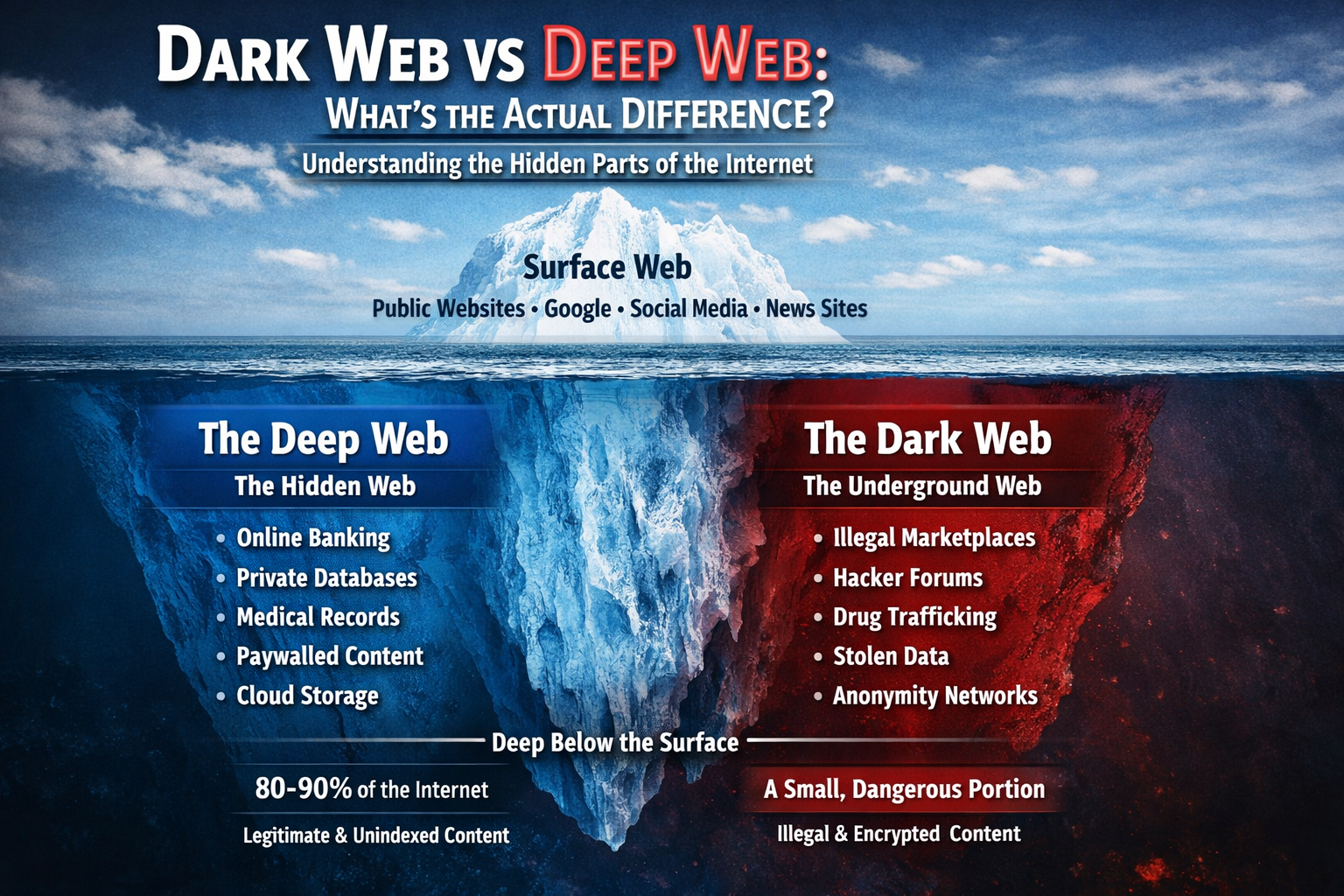
Dark Web vs Deep Web: What's the Actual Differenc…
Confused about the dark web and deep web? You're not alone. Most people use the…
Read Tutorial
The Dark Web: A Beginner's Guide to Accessing & N…
The dark web sounds scarier than it is. In this guide, I show you how to access…
Read Tutorial




Discussion (0 comments)
Join the Discussion
No comments yet
Be the first to share your thoughts on this tutorial!